
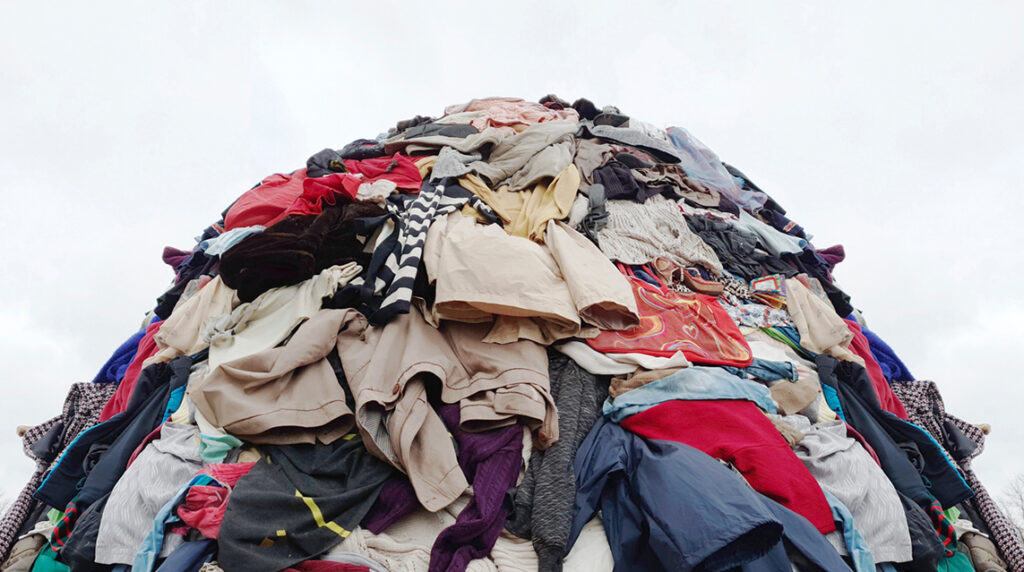

I’ve traveled regularly to and from Costa Rica, and during that time, I’ve worked on a book about fast fashion and the reuse economy. We have a significant global waste problem that is killing the planet and adversely affecting living beings. What if I told you that between 100 to 150 billion pieces of clothing get manufactured annually, despite the fact that there are about 8.2 billion people on the planet? It’s a shocking statistic.
Developing countries are dumping grounds for the unsustainable waste produced for European and American markets. This happens because unscrupulous companies ship waste to developing nations (e.g., fake, torn, and worthless clothing) while taking the best items to sell at a premium on platforms such as eBay, Posh Mark, and others. The harsh truth is this: if someone doesn’t make a sale in a developing country, their family might not eat that night.
Why Fast Fashion Fails in Developing Nations
On a recent trip to Costa Rica, I walked 15 miles and spent the day speaking to people who sell shoes in brick-and-mortar stores, kiosks, or even on sheets on the ground. Having been in the shoe business for years, I can spot fakes from a mile away. I saw a lot of fast fashion, fake shoes, and dated merchandise. I had a bag of our footwear with me. The people loved what they saw—high-quality, fashionable, used shoes. The demand for the shoes was there.
Fast fashion thrives on a cycle of rapid production, very low prices, and the expectation that consumers will throw away and repeat the cycle the following month. Unfortunately, these unethical companies are right in many ways. For instance, 65% of Generation Z throw away a piece of clothing monthly. That waste often ends up in countries like Costa Rica, where thriving reuse economies exist so people can make a living. But a lot of it is waste.
- A significant portion of the clothing is of low quality. That makes it hard to sell.
- Unscrupulous reuse brands remove genuine brand-name items with stronger resale value. In other words, they ship fakes and resell brands themselves.
- Dumping into developing countries destroys commerce and livelihoods in those countries. That’s why regulators try to protect their markets.
The Environmental and Social Toll of Fast Fashion
Fast fashion may seem quick and easy, but its costs are massive. $20 or $30 pieces of clothing may seem great for people’s wallets, but it usually isn’t. For one, when things are cheap, consumers tend to keep buying more than they would in the long run. A good exercise is for people to look at their spending on clothing in a given year. For fast fashion buyers, the costs may be much higher than expected.
But there’s more to the matter. The truth is that the fast fashion industry relies on unethical labor practices. For one, many women in developing countries, they’re the ones getting exploited since they make up between 80% and 85% of the garment workers. According to reporting by The Georgetown Journal of Gender and the Law, 2% of garment workers earn enough to cover their basic needs.
Beyond these seemingly intractable social challenges, fast fashion is an environmental challenge. Many of us believe the world doesn’t need to produce 100 to 150 billion articles of clothing for its 8.2 billion population. That overconsumption ends up in places beyond landfills. It pollutes rivers, lakes, landscapes, and the ocean. People who have lived near water know what the seas wash onshore after storms—fast fashion and junk.
The Second-hand Boom: A Market Shift
Our fast-fashion culture should realize that 70% of the global population wears second-hand clothing. But just as most of us would want to wear nice attire that isn’t dated, torn, or looks cheap, so do people worldwide. Genuine brands that make clothing of organic materials (e.g., 100% cotton) allow clothing to last beyond a year. In turn, vendors and markets like those in Costa Rica obtain inventory that has long-term resale potential.
The world isn’t going to move away from trying to save the environment and the planet. As more superstorms and natural disasters occur, the global population will demand attention to end the “take, make, dispose” consumption model. In other words, we will return to manufacturing where quality, rather than fast fashion quantity, is of greater value. That’ll mean the following for consumers:
- Well-known brands over no-name fashion labels.
- Durable natural fabrics that wear well.
- A return to classic timeless styles.
What Needs to Change?
What can we do to stop overconsumption and dumping in developing nations, which isn’t ethical, moral, or fair? It takes a shift in our mindsets.
- Consumers should prioritize quality over quantity, forcing brands to slow and reorient what gets produced.
- We all have to reconsider what we buy. There are billions of high-quality clothing and shoes. Second-hand doesn’t mean second-rate.
- When people give away their items, they have to ensure the quality is good so the supply chain has high-quality merchandise to sell.
- Brands and governments need to empower local economies. This should include banning unethical and socially irresponsible companies.
- Those of us in the reuse economy should keep speaking up because education and information are key for conscious shopping.
Finally, if nothing else in this article, take this message. Buy less, and when you do, choose wisely. Rethink fast fashion because it comes at a substantial cost. Instead, join the reuse economy.
© 2025 Wayne Elsey. All Rights Reserved.