
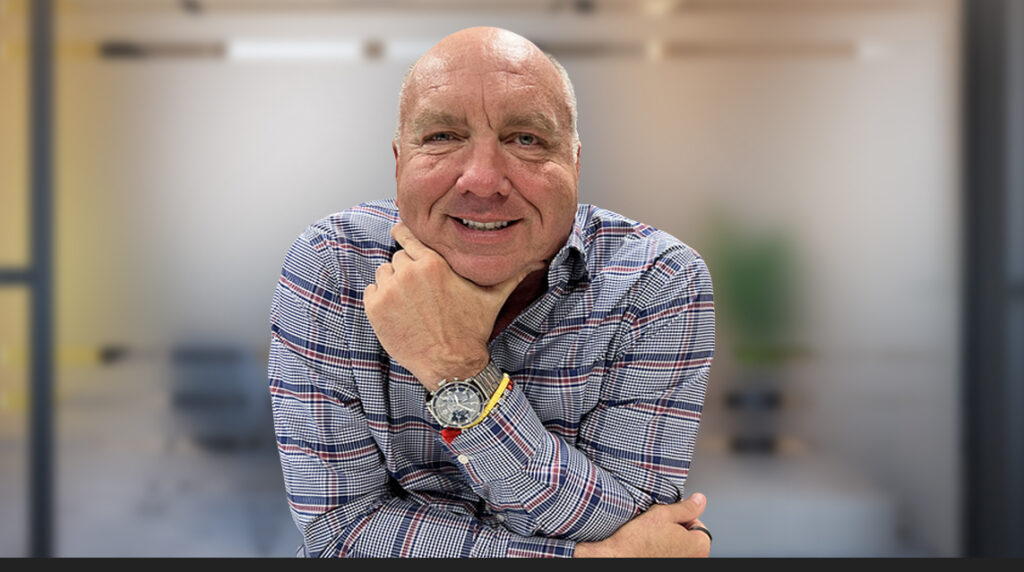

In late December 2004, I was a footwear executive doing well by every measure the business world uses. Then the Indian Ocean tsunami hit, and I watched the coverage, like millions of others, feeling helpless. Except I wasn’t completely helpless. I knew how to move shoes. So I started collecting them for families who had lost everything, and I didn’t realize then I would embody the question: what is a social entrepreneur?
That effort became a nonprofit I founded and grew from zero to more than $74 million in fewer than five years. I’m proud of it. But it also taught me the hardest lesson of my career: donations alone don’t scale. An organization that depends on the next check is always one bad quarter away from cutting its impact. That lesson led me to social enterprise. And after years of building organizations, here’s my answer to the question of social entrepreneurship.
What is a social enterprise, and who is a social entrepreneur? A social enterprise is an organization that uses business methods, like selling products or services, to solve a social or environmental problem. Unlike a traditional business, its mission comes first. Unlike a traditional nonprofit, it earns most of its own revenue instead of relying mainly on donations. A social entrepreneur is the founder of a social enterprise, and I’m an example of that.
What Is a Social Enterprise, in Simple Terms?
Think of a social enterprise as a business with a purpose beyond making money. It provides real value to real customers, and its revenue funds a mission. The Social Enterprise Alliance is a leading U.S. membership body for the field. It describes social enterprises as organizations that tackle an unmet need or a social or environmental problem through a market-driven approach.
Here’s what surprises many people. In the United States, “social enterprise” isn’t a legal entity type. You won’t find it on a state incorporation form. It describes how an organization works, not how it’s registered. That’s why no single universal definition exists, and no one can answer the question of what a social entrepreneur is. But every credible version shares two things: a clear mission and an earned-income engine that pays for it.
How Is a Social Enterprise Different from a Nonprofit or a Regular Business?
The simplest way to see it is side by side.
| Traditional business | Traditional nonprofit | Social enterprise | |
| Primary purpose | Profit for owners | Social mission | Social or environmental mission, delivered through business |
| Main revenue | Sales | Donations and grants | Mostly earned income from sales |
| What happens to profit | Paid to owners or shareholders | Reinvested in the mission (no owners) | Largely reinvested in the mission; may also reward owners |
| Legal form (U.S.) | LLC or corporation | 501(c)(3) or similar | Any of the above, including benefit corporations |
A nonprofit asks people to donate. But a social enterprise asks people to buy, trade, or participate in something that has value to them. I’ve written before about the problem with relying on donations, and it’s why I believe more mission-driven leaders should think like entrepreneurs. Many of the best social enterprises are run by nonprofits that added an earned-income arm. The point is sustainability, not tax status.
What Are the Three Types of Social Enterprise?
The Social Enterprise Alliance groups the field into three broad models. Most organizations fit one of them.
1. Opportunity employment
These organizations hire people who face serious barriers to mainstream jobs, such as people coming out of prison or survivors of trafficking and addiction. The job is the impact. Greyston Bakery and Thistle Farms are well-known examples.
2. Transformative products or services
These organizations create impact through what they sell or deliver. Benetech is in this category. My company shoe drive fundraising company, Funds2Orgs, invites schools, churches, and nonprofits to collect gently worn shoes and get paid for them. We then supply those shoes to micro-entrepreneurs in developing nations, who sell them to earn a living. No donor had to write a check. The value was already sitting in people’s closets. That’s the heart of the reuse economy.
3. Donate back
These businesses commit a share of products or profits to a cause. Bombas and Warby Parker are the classic examples. It’s the most familiar model to consumers, and the impact depends on how seriously the company measures what its giving achieves.
How Are Social Enterprises Structured in the U.S.?
Because “social enterprise” isn’t a legal category, founders choose from existing structures. The most common are:
- A nonprofit with an earned-income program. Tax-exempt status protects the mission, and a business line funds it.
- An LLC or traditional corporation. The founders commit to a mission by choice, not by law.
- A benefit corporation. This state legal form requires a company to consider its impact on society and the environment, not just shareholders.
People often confuse benefit corporations with Certified B Corps. A B Corp is a certification, not a legal form. B Lab grants it after an independent assessment. As of May 2026, B Lab reports more than 10,700 Certified B Corporations across 104 countries and 162 industries, employing over one million people.
My advice: choose your structure based on how you’ll fund growth. Investors, grant makers, and lenders each prefer different models, so talk to an attorney before you file anything.
What Does It Take to Build a Social Enterprise That Lasts?
Good intentions don’t build institutions. Business discipline does. I was reminded of this by my friend Joe Foster, co-founder of Reebok, whom I sat down with to talk about building a global brand.
Joe came from a family that had been hand-making running shoes since the late 1800s, and Olympians wore them. In 1958, he and his brother Jeff started their own company and named it Reebok. When Joe noticed women in America embracing a new workout called aerobics, he moved on it before the rest of the industry did. Within four years, Reebok grew from a $9 million company to a $900 million company.
Reebok isn’t a social enterprise, and Joe would be the first to say so. But the lessons are the same, and that’s why Joe and I wrote our book together. We both believe in spotting opportunities and acting on them before anyone else does.
Here are three lessons from that work that apply to every social entrepreneur:
- Start with the problem. Joe saw a gap in women’s fitness. I saw millions of people who needed affordable shoes to earn a living.
- Hire people better than you. Product doesn’t scale; people do. Joe built Reebok by listening to his team, and every strong social enterprise I’ve seen does the same.
- Treat revenue as your mission’s oxygen. If you can’t pay your people, you can’t serve anyone. Earned income is what lets a mission survive a recession or a bad quarter.
And once you’re operating, measure your impact honestly. Customers and partners increasingly expect proof, not promises.
Frequently Asked Questions About Social Enterprise
Can a social enterprise make a profit?
Yes. A social enterprise can and should generate a surplus. What sets it apart is that most of that profit goes back into the mission rather than primarily rewarding owners.
Is a social enterprise a nonprofit?
It can be, but it doesn’t have to be. Social enterprises operate as nonprofits, LLCs, corporations, and benefit corporations. The defining feature is a mission funded largely by earned income.
Is a B Corp a social enterprise?
Not automatically. B Corp certification measures a company’s social and environmental performance. Many B Corps are social enterprises, but a certified company’s core business may not exist to solve a social problem.
What is an example of a social enterprise?
Well-known examples include Greyston Bakery, which hires people facing barriers to employment, and Funds2Orgs, which pays community groups for gently worn shoes and supplies them to micro-entrepreneurs in developing nations.
How do social enterprises make money?
They make money the same way any business does: by selling products or services people want. The difference is that the business model itself is built to deliver social or environmental impact.
Mission and Discipline
A social enterprise isn’t a halfway point between charity and business. It’s what happens when you take one’s mission and the other’s discipline and refuse to give up either. I learned that lesson after the tsunami. Joe learned his version in a rundown factory in Bolton, England. If you’re building something with a purpose, start there: solve a real problem, get the right people in the room, and make sure the business can pay for the good it wants to do.
© 2026 Wayne Elsey. All Rights Reserved.